
In today’s digital world, learning religion has also become more accessible through the internet. One of the most important developments is how students now connect with an Online Quran Teacher from anywhere in the world.
The role of an Online Quran Teacher has grown significantly as families look for flexible, safe, and effective ways to learn Quran recitation, Tajweed, and Islamic studies.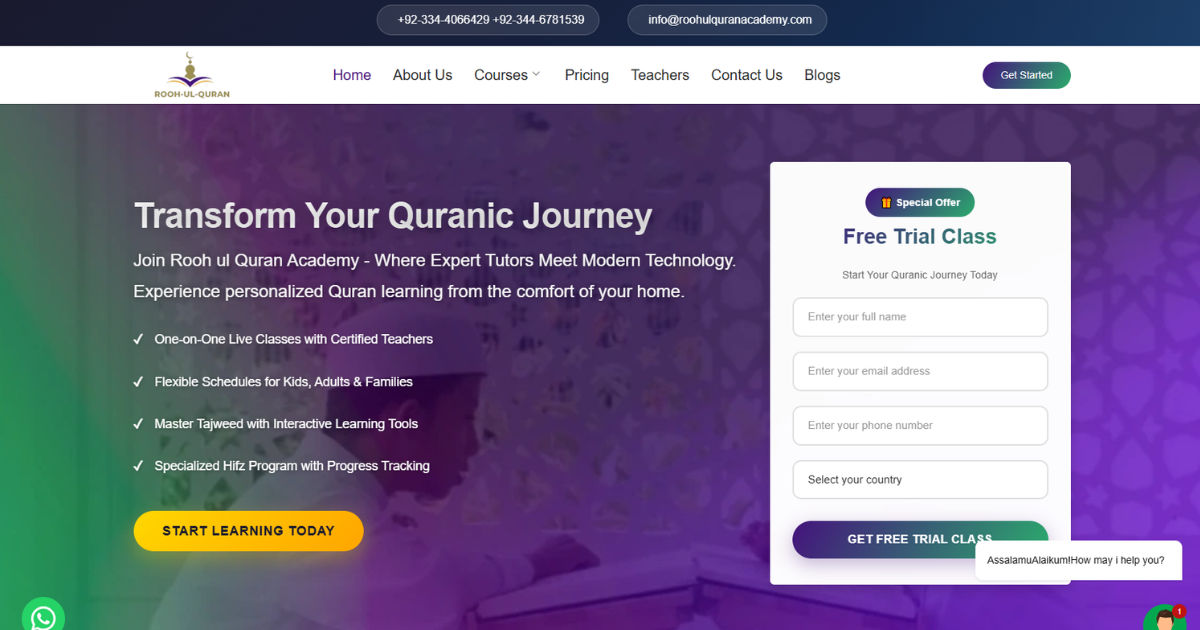
Many students prefer learning from an Online Quran Teacher because it allows them to study at home while still receiving structured guidance.
An Online Quran Teacher is not just a video call instructor; they are a mentor who guides students step by step in pronunciation, memorization, and understanding of the Quran.
The interaction between students and an Online Quran Teacher is shaped by technology, communication tools, and teaching methods designed for remote learning.
Unlike traditional classrooms, an Online Quran Teacher depends heavily on digital platforms to create a personal and focused learning experience.
This guide explains in detail how students interact with an Online Quran Teacher, what tools they use, how lessons are structured, and what makes online Quran learning effective.
It is written in simple language so 12th-grade students can easily understand how modern Islamic education works through an Online Quran Teacher system.
The Online Learning Environment
The learning environment created by an Online Quran Teacher is based on virtual classrooms. Students usually connect through video conferencing apps where they can see and hear their Online Quran Teacher in real time. This environment is designed to feel like a physical classroom but with more flexibility.
An Online Quran Teacher prepares digital lesson plans that include recitation practice, memorization schedules, and Tajweed rules. Students interact by reading aloud while the Online Quran Teacher listens carefully and corrects mistakes instantly. This real-time correction is one of the most important parts of learning with an Online Quran Teacher.
The environment is usually quiet and structured. Students are encouraged to sit in a distraction-free space so they can focus fully on the Online Quran Teacher. Many learners feel more comfortable asking questions in this setting because the interaction with an Online Quran Teacher is one-on-one or in small groups.
Another key feature is flexibility. Students can schedule sessions based on their availability, making it easier to stay consistent with their Online Quran Teacher. This flexibility helps students of different time zones and school schedules continue learning without interruption.
Communication Methods Between Students and Online Quran Teachers
Communication is the foundation of learning from an Online Quran Teacher. Most communication happens through live video sessions where students can directly hear pronunciation and repeat verses. The Online Quran Teacher listens carefully and provides corrections immediately.
Audio calls are also commonly used when internet speed is low. Even in audio-only sessions, an Online Quran Teacher ensures proper pronunciation by listening closely to each word the student recites. Written chat is another method where students ask questions and the Online Quran Teacher explains meanings or rules.
Many platforms also allow screen sharing. An Online Quran Teacher can display Quran pages, Tajweed charts, or digital notes. This visual support helps students understand complex concepts more easily.
Students are encouraged to communicate openly with their Online Quran Teacher. If they do not understand a rule or forget a verse, they can immediately ask questions. This constant communication helps build confidence and improves learning speed with an Online Quran Teacher.
In some cases, recorded lessons are shared by the Online Quran Teacher so students can revise later. This combination of live and recorded communication strengthens the learning process.
Interaction Patterns in Online Quran Classes
Interaction between students and an Online Quran Teacher follows a structured pattern. Each session usually begins with revision of previous lessons. The Online Quran Teacher asks the student to recite earlier verses before moving forward.
After revision, new lessons are introduced. The Online Quran Teacher reads a verse first, and the student repeats it. This repetition continues until pronunciation is correct. The interactive cycle ensures that students learn accurately under the supervision of an Online Quran Teacher.
Students are also encouraged to memorize short portions daily. The Online Quran Teacher checks memorization by asking students to recite without looking at the text. If mistakes occur, the Online Quran Teacher gently corrects them and repeats the explanation.
Another important interaction pattern is feedback. The Online Quran Teacher gives performance feedback after each session. This feedback helps students understand their strengths and weaknesses.
Some students interact more actively by asking questions about meanings and interpretations. The Online Quran Teacher explains these in simple language suitable for learners.
This structured interaction creates discipline and consistency in learning with an Online Quran Teacher.
Tools and Technology Used for Online Quran Learning
Technology plays a major role in connecting students with an Online Quran Teacher. Video conferencing tools like Zoom, Skype, or specialized Islamic learning platforms are commonly used.
A stable internet connection is essential for smooth communication with an Online Quran Teacher. Headphones and microphones are often used to improve sound clarity so the Online Quran Teacher can hear pronunciation clearly.
Digital Quran apps are also important tools. These apps allow students to highlight verses, follow along, and practice with their Online Quran Teacher during sessions.
Some platforms include whiteboards where an Online Quran Teacher can write Tajweed rules or highlight pronunciation marks. This visual support improves understanding.
Recording tools are another useful feature. Students can replay lessons from their Online Quran Teacher to revise at home. This helps in long-term memorization.
Even simple tools like PDF Quran files or shared documents are used regularly by an Online Quran Teacher to make learning more organized and structured.
Student Engagement Strategies in Online Learning
Engagement is key to success when learning from an Online Quran Teacher. Students are encouraged to actively participate rather than just listen.
One common strategy is repetition. The Online Quran Teacher asks students to repeat verses multiple times until fluency improves. This builds confidence and memory strength.
Another strategy is daily practice assignments. The Online Quran Teacher gives small tasks such as memorizing a few lines or revising Tajweed rules.
Interactive questioning is also important. Students are encouraged to ask questions whenever they are confused. The Online Quran Teacher responds with clear explanations.
Some Online Quran Teacher sessions include quizzes or short tests to check progress. These keep students engaged and motivated.
Positive reinforcement is another strategy used by an Online Quran Teacher. Encouragement and appreciation help students stay consistent in their learning journey.
Feedback and Correction Methods
Feedback is one of the strongest parts of learning from an Online Quran Teacher. Immediate correction helps students improve quickly.
When a student makes a pronunciation mistake, the Online Quran Teacher stops and demonstrates the correct way. The student then repeats until it is correct.
The Online Quran Teacher also tracks progress over time. Notes are often kept to record improvement in recitation and memorization.
Constructive feedback is given in a polite and supportive way. The goal of an Online Quran Teacher is to guide, not criticize.
Sometimes detailed feedback includes Tajweed rules explanations, helping students understand why a correction is needed.
Regular assessments are conducted by the Online Quran Teacher to ensure continuous improvement.
Challenges in Online Interaction
While learning from an Online Quran Teacher is effective, there are some challenges.
Internet issues can interrupt lessons and affect communication with an Online Quran Teacher. Poor audio quality may cause pronunciation difficulties.
Another challenge is student distraction at home. Unlike a classroom, home environments can be noisy, making it harder to focus on the Online Quran Teacher.
Time zone differences can also create scheduling difficulties when working with an Online Quran Teacher in another country.
Some students may feel less motivated without physical presence, but a skilled Online Quran Teacher uses engagement techniques to overcome this.
Technical issues with apps or devices can also interrupt learning sessions with an Online Quran Teacher.
Despite these challenges, most students adapt over time with guidance from their Online Quran Teacher.
Best Practices for Students Learning Online
To get the best results from an Online Quran Teacher, students should follow some important practices.
First, consistency is important. Regular attendance ensures steady progress with an Online Quran Teacher.
Second, students should prepare before each class. Reviewing previous lessons helps them perform better with their Online Quran Teacher.
Third, a quiet and clean study environment improves focus during sessions with an Online Quran Teacher.
Fourth, students should actively participate by repeating and asking questions during lessons with their Online Quran Teacher.
Fifth, revision outside class hours is essential. The Online Quran Teacher usually gives assignments that should be practiced daily.
Following these habits helps students build a strong relationship with their Online Quran Teacher and improves learning outcomes.
Safety, Etiquette, and Future of Online Quran Learning
Respectful behavior is important when interacting with an Online Quran Teacher. Students should join classes on time and maintain proper discipline.
Muting background noise, keeping cameras on, and listening carefully are part of good etiquette with an Online Quran Teacher.
Privacy is also important. Students should use trusted platforms when learning from an Online Quran Teacher.
Looking ahead, online Quran learning is expected to grow further. Advanced tools like AI assistance, improved video quality, and interactive apps will support the work of an Online Quran Teacher.
Virtual reality classrooms may also become part of future learning experiences with an Online Quran Teacher.
Despite technological changes, the role of an Online Quran Teacher will remain centered on guidance, correction, and spiritual education.
Conclusion
Learning through an Online Quran Teacher has transformed the way students study the Quran in modern times. It combines traditional religious education with modern technology, making it accessible to learners everywhere. The interaction between students and an Online Quran Teacher is structured, interactive, and supportive, allowing continuous improvement in recitation and understanding.
From video sessions to feedback systems, every aspect of learning is designed to make the experience effective with an Online Quran Teacher. Students benefit from flexibility, personalized attention, and consistent guidance. Although there are challenges like internet issues and distractions, the system remains highly effective when guided by a skilled Online Quran Teacher.
In conclusion, the relationship between students and an Online Quran Teacher is built on communication, discipline, and mutual respect. As technology continues to evolve, this form of learning will become even more advanced, but the core purpose of an Online Quran Teacher will always remain the same: to help students connect deeply with the Quran.