
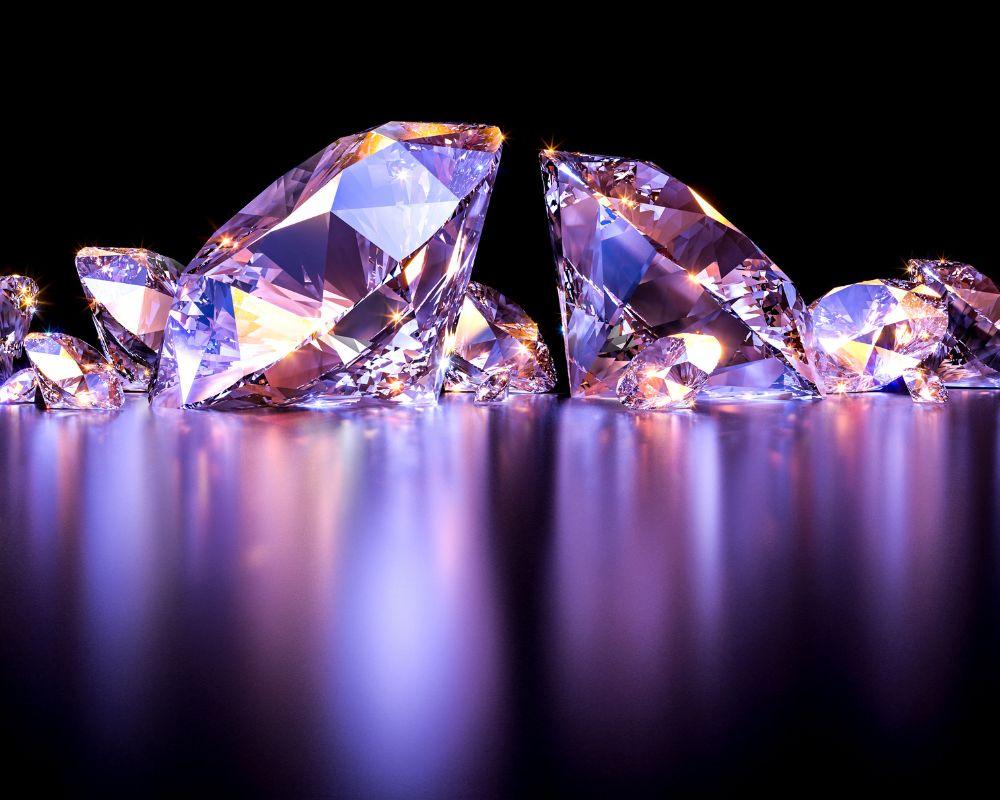
Diamonds have long been cherished as symbols of enduring love, wealth, and beauty. Their timeless appeal has transcended generations, cultures, and even scientific fields, making them a uniquely versatile gemstone. While they are most often associated with engagement rings and fine jewelry, diamonds also play a crucial role in various industries, from cutting-edge technology to scientific exploration. In this article, we will uncover the multifaceted nature of diamonds, exploring their origins, uses, and the ethical considerations surrounding their production.
1. The Origins of Diamonds: Nature’s Miracle
Diamonds form deep within the Earth under extraordinary conditions. At depths ranging from 90 to 120 miles below the Earth's surface, intense pressure and heat cause carbon atoms to crystallize into a diamond's unique structure. This process can take millions of years, making diamonds some of the oldest naturally occurring materials on Earth.
Once formed, diamonds are brought to the surface through volcanic eruptions, which create kimberlite pipes—funnels of rock that allow diamonds to reach the Earth's crust. These eruptions carry diamonds from their deep origins to the surface, where they are then extracted and cut into the stunning gemstones that are treasured worldwide.
The formation of diamonds under such extreme conditions contributes to their renowned strength and brilliance. As the hardest known natural material, diamonds are unparalleled in their ability to resist scratches and retain their clarity and shine over time.
2. The Allure of Diamonds: Cultural and Emotional Significance
Diamonds have captivated humans for thousands of years, and their allure goes far beyond their physical beauty. Throughout history, they have been associated with power, prestige, and eternal love. In ancient India, diamonds were seen as sacred objects, symbolizing the divine and believed to possess protective and healing powers. The belief that 人造鑽石香港 could enhance strength and provide invincibility led to their use by warriors and kings.
In the West, diamonds have long been tied to royalty and the elite. European monarchs, starting with the French kings, often wore diamonds as a display of their wealth and power. The most famous example is the Hope Diamond, which was once part of the French royal collection before making its way into the hands of collectors and institutions.
The modern association between diamonds and romantic love was solidified in the 20th century with De Beers' iconic "A Diamond is Forever" campaign. This marketing strategy transformed diamonds into the ultimate symbol of love and commitment, particularly through their use in engagement rings. Today, diamonds remain a deeply emotional symbol, often representing milestone moments like engagements, weddings, and anniversaries.
3. The Science of Sparkle: How Diamonds Achieve Their Dazzling Brilliance
What makes diamonds stand out is not just their size or rarity, but their ability to reflect light in a way that no other gem can. A diamond's brilliance, or sparkle, is primarily due to its cut. The precise arrangement of facets in a diamond allows it to reflect light in such a way that it bounces off the surfaces within the stone, creating its iconic shine. The cut of a diamond is an art form in itself, with professionals carefully shaping the gem to maximize its natural sparkle.
The clarity of a diamond also plays a role in how it shines. Diamonds with fewer internal flaws, known as inclusions, allow light to pass through more easily, enhancing their brilliance. Additionally, diamonds with minimal color tend to sparkle more since they allow more light to reflect off their surfaces. Lastly, the carat weight of a diamond impacts its size, with larger diamonds typically being more valuable.
A well-cut diamond will have a perfect balance of brilliance, fire (colored flashes of light), and scintillation (the sparkle seen when the diamond is moved). This combination of factors gives diamonds their signature visual appeal.
4. Diamonds in Industry: Beyond Jewelry
While diamonds are most famous for their use in jewelry, they also play an essential role in various industries due to their unique properties. Their unmatched hardness makes them indispensable in cutting, grinding, and drilling operations.
Diamonds are commonly used in industrial tools such as saw blades, drill bits, and grinding wheels to cut through tough materials like metal, stone, and concrete. These tools are used in manufacturing, construction, mining, and even in the creation of other gemstones. The ability of diamonds to cut through virtually any material without deteriorating ensures their continued demand in these sectors.
In recent years, diamonds have also found applications in technology. Their extraordinary thermal conductivity makes them ideal for use in electronics and high-performance computing. Diamond-based semiconductors are being developed for use in lasers, light-emitting diodes (LEDs), and other advanced electronic devices, where their ability to dissipate heat efficiently can prevent overheating and improve performance.
Moreover, diamonds are increasingly being explored for use in quantum computing, where their unique atomic structure may offer new ways to process information at unprecedented speeds and efficiencies.
5. Ethical Diamonds: Addressing Concerns About Mining Practices
The diamond industry has faced significant ethical scrutiny, particularly in regard to conflict diamonds or blood diamonds. These diamonds are mined in war zones and sold to finance armed conflict, often involving human rights violations and exploitative labor practices. To address this issue, the Kimberley Process Certification Scheme was established in 2003 to prevent the trade in conflict diamonds by ensuring that diamonds are sourced from regions not involved in conflict.
Despite these efforts, challenges remain, as the Kimberley Process has been criticized for its loopholes and lack of enforcement in some regions. This has led to growing consumer demand for ethical diamonds—stones that are mined in compliance with labor and environmental standards.
Lab-grown diamonds have become an increasingly popular alternative, offering a sustainable, conflict-free option. Created in controlled environments using high-pressure, high-temperature methods or chemical vapor deposition, lab-grown diamonds are chemically identical to natural diamonds. They have the same brilliance, durability, and beauty, but without the environmental and ethical concerns tied to traditional mining practices. As technology advances, the cost of producing lab-grown diamonds continues to decrease, making them a more accessible and ethical choice for many consumers.
6. The Future of Diamonds: Sustainability and Technological Advancements
The future of diamonds lies in both sustainability and innovation. As demand for eco-friendly and ethically sourced products continues to grow, the diamond industry is shifting toward more sustainable practices. Efforts are being made to reduce the environmental impact of diamond mining, including using more energy-efficient mining processes and restoring mined lands.
Lab-grown diamonds are poised to play a significant role in the future, offering a sustainable alternative without compromising on quality. As they become more mainstream, they could change the diamond market, providing consumers with more options for responsibly sourced, environmentally friendly diamonds.
On the technological front, diamonds will continue to be explored for their potential in fields such as quantum computing, medicine, and energy storage. Their unique properties—particularly their ability to conduct heat and light with minimal energy loss—make them invaluable in the development of next-generation technologies. As research into diamond-based materials progresses, we may see them become integral components of everything from high-speed computers to medical diagnostic devices.
Conclusion: Diamonds—A Legacy of Beauty and Innovation
Diamonds have earned their place in history as symbols of love, wealth, and resilience. Their formation deep within the Earth and their stunning ability to capture light have made them an object of fascination for centuries. While diamonds are most commonly associated with jewelry, their impact extends far beyond adornment, influencing industries, technology, and scientific advancements.
As the diamond industry evolves to meet the demands of ethical sourcing and sustainability, the gemstone's legacy will continue to shine brightly. Whether in the hands of royalty, adorning an engagement ring, or powering cutting-edge technology, diamonds will remain a symbol of nature’s brilliance and humanity’s ingenuity.